
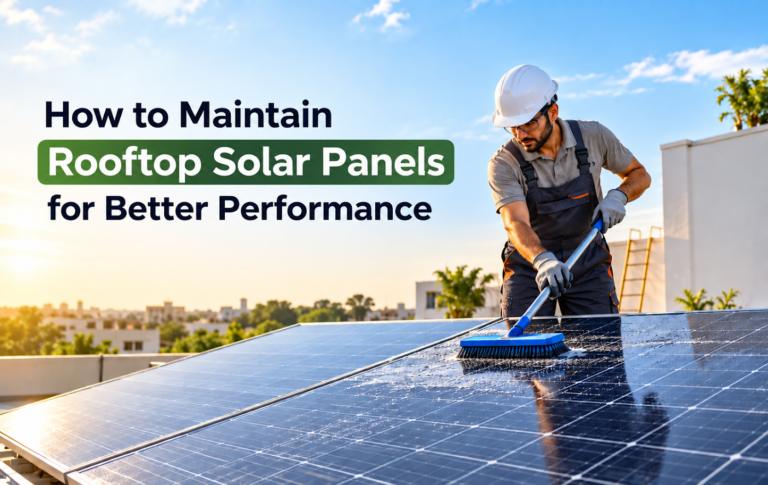
 Solar panel installation on your roof can be a great way to save money on your electricity costs, be more energy independent and make your home more eco-friendly. But it is just the initial step in the installation of a home solar system. Keeping your system in good condition and performing basic maintenance is also crucial to make sure that it can keep producing electricity efficiently for years to come.
If you have rooftop solar panels for home, residential solar panels, or a full home solar system, you can discover early on if there are any performance issues, and ensure that your rooftop solar system investment remains effective.The positive thing is that solar panels do not tend to have too much maintenance requirements. Frequent cleaning, visual monitoring, and professional servicing activities can help a great deal in maintaining system performance.
Why Is Solar Panel Maintenance Important?
Residential solar panels are designed for the outdoor environment and to be weather-proof. However, dust, dirt, leaves, bird droppings, pollution and other materials can build up on their surfaces over time.
The effect of soiling and shading on the performance of PV modules has been a specific focus of research by the Ministry of New and Renewable Energy (MNRE) in India.
A dust layer might hinder the effective absorption of sunlight by the PV cells.Likewise, if the trees are growing or nearby buildings are adding new shade to your panels, it can impact the sunlight reaching your panels.
1. Clean Your Solar Panels Regularly
Dust and dirt are common, particularly in areas with high pollution, construction activity, or limited rainfall. Bird droppings, leaves and other debris can also accumulate on the rooftop solar panels for home.
However, there is no universal cleaning schedule for every home. The ideal frequency depends on your location, surrounding environment, rainfall, dust levels, and the amount of soiling on the panels.
When cleaning:
Safety should always come first. Rooftop work involves electrical and fall hazards, so homeowners should avoid risky DIY maintenance.
2. Monitor Your Solar System's Performance
Cleaning alone is not enough. You should also keep an eye on how much electricity your home solar system is generating.
Most modern solar installations have an inverter or monitoring platform that allows homeowners to track electricity generation.
Instead of looking at one day's output, observe your system's performance over time. Solar generation naturally changes because of weather, season, sunlight hours, and temperature.
Look for unusual changes such as:
Early detection can make troubleshooting easier and potentially reduce repair costs.
3. Check for New Sources of Shade
Rooftop solar system need sunlight to generate electricity efficiently. Even if your roof had excellent sunlight exposure when the system was installed, the surrounding environment can change.
For example, trees may grow taller, new structures may appear, or temporary objects may begin casting shadows over the panels.
Inspect the rooftop and surrounding area occasionally to see whether new shading has developed.
If shading becomes significant, speak with a qualified solar professional before making changes to trees, structures, or the panel layout.
For this reason, proper site assessment during installation is also important. Energy United India notes that roof condition, available space, shading, and electricity usage are considered when designing its rooftop solar solutions.
4. Inspect the Panels for Physical Damage
Your residential solar panels are exposed to heat, rain, wind and other outdoor conditions throughout the year.
During routine visual checks, look for:
A cracked panel or damaged electrical component should be inspected by a qualified technician.Regular visual inspections can help identify issues before they affect the overall system significantly.
5. Check the Inverter
The inverter is an essential part of a solar installation because it converts the electricity generated by the panels into usable electricity for your home or grid connection.
If your inverter displays an error code, warning light, or unusual status, check the manufacturer's documentation and contact your installer or service provider if necessary.
Keeping the inverter area clean, dry, properly ventilated, and free from unnecessary obstruction can also support reliable operation.
How Often Should You Maintain Rooftop Solar Panels for Home?
There is no single maintenance schedule that works for every installation.
You can clean it depending on:
Instead of cleaning blindly on a fixed schedule, monitor the condition of your panels and follow the manufacturer's recommendations. Professional inspections can then be scheduled according to the system's requirements.
Common Solar Panel Maintenance Mistakes to Avoid
While solar maintenance is relatively simple, homeowners should avoid a few common mistakes.
Conclusion
A solar installation can provide clean electricity and help reduce dependence on conventional grid power, but maintaining the system properly is essential for long-term performance.
If you are planning to install a rooftop solar system, choosing the right installation partner is just as important as maintaining the system afterward.
Energy United India provides customized rooftop solar solutions for homes, businesses, and other properties. Its process includes site assessment, system design, equipment procurement, installation, testing, grid synchronization, and ongoing support. The company reports more than 2,400 completed projects and 27 MW+ of solar installations.
With the right system design, professional installation, and proper maintenance, your rooftop can become a reliable source of clean energy for years to come.
To explore a solar solution suited to your roof and electricity requirements, visit Energy United India and request a site survey or solar estimate.