
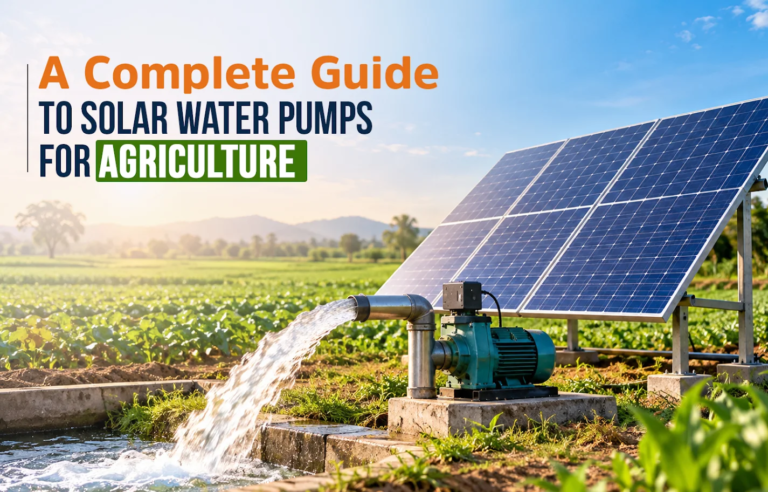
 Agriculture is something that depends on reliable irrigation. However, when farmers use conventional diesel-based or electric-powered pumps, the cost increases. Moreover, rising fuel prices and inconsistent electricity supply are making things even worse. That’s why farmers are now exploring more sustainable irrigation solutions.
 That’s why solar water pumps for agriculture are becoming more and more popular. Since solar pumps are more efficient, they have become one of the best alternatives to traditional options. Also, they are especially useful where the electricity is inconsistent. With solar pumps, farmers can pump water from water sources and can explore more sustainable irrigation solutions.
In India, solar-powered agricultural pumps are also supported through government initiatives such as PM-KUSUM, which includes provisions for standalone solar agriculture pumps and solarisation of existing grid-connected agricultural pumps.
What Are Solar Water Pumps for Agriculture?
Solar water pumps for agriculture are irrigation systems powered by electricity generated through solar photovoltaic (PV) panels. Instead of relying entirely on diesel or grid electricity, the pump uses energy produced by the panels to move water.
A typical system consists of:
During sunlight hours, the solar panels generate electricity that powers the pump. The water can then be directed toward agricultural fields through pipes, sprinklers, drip irrigation, or other irrigation methods.
How Does an Agricultural Solar Water Pump Work?
The working process of an agricultural solar water pump is relatively straightforward.
First, solar panels capture sunlight and convert it into electrical energy. The controller manages this electricity and supplies suitable power to the pump. The pump draws water from the available source and pushes it through a delivery pipeline to the required area.
Depending on the system design, farmers may use either surface pumps or submersible pumps. Surface pumps are generally suitable when the water source is relatively shallow, while submersible pumps are designed for applications where water needs to be lifted from greater depths.
The actual pump capacity should be selected according to factors such as water requirement, groundwater depth, total head, pipe length, crop requirements, and irrigation method. Let’s explore why to choose Solar Water Pumps for Agriculture?
1. Lower Dependence on Diesel
Diesel-powered pumps require regular fuel purchases, which can become an ongoing expense for farmers. Solar pumps use sunlight as their primary energy source, reducing dependence on diesel for irrigation.
Government information on PM-KUSUM specifically identifies replacement of diesel agricultural pumps with solar pumps as one of its objectives.
2. Reduced Operating Expenses
Once installed, a solar pumping system does not require regular fuel purchases. This can help reduce recurring energy expenses associated with irrigation.
The actual savings, however, depend on factors such as pump capacity, daily operating hours, water requirement, existing fuel or electricity costs, and local solar conditions.
3. Useful in Areas With Limited Grid Access
One of the major advantages of solar pumping is its suitability for off-grid agricultural locations. Farmers in areas without dependable electricity can use standalone solar pumping systems for irrigation.
Under PM-KUSUM Component B, standalone solar agriculture pumps are specifically intended for off-grid areas where grid electricity is not available.
4. Uses Renewable Energy
Solar energy is renewable and produces electricity without directly burning diesel or other fossil fuels at the point of generation. This makes solar-powered irrigation an option for farmers looking to reduce the conventional energy footprint of their operations.
5. Supports Modern Irrigation
A solar pump can be combined with efficient irrigation systems such as drip and sprinkler irrigation. This allows farmers to manage water distribution more efficiently and deliver water closer to where crops need it.
Types of Agricultural Solar Water Pumps
Choosing the right agricultural solar water pump depends largely on the water source and irrigation requirements.
Choosing the right agricultural solar water pump depends largely on the water source and irrigation requirements.
Common Solar Panel Maintenance Mistakes to Avoid
Surface Solar Pumps
Surface pumps are installed above the water source and are generally used when water is available at a relatively shallow depth. They can be suitable for ponds, tanks, canals, and shallow wells.
Submersible Solar Pumps
Submersible pumps operate underwater and are commonly used for deeper water sources such as borewells. The pump must be selected according to the required water flow and lifting height.
AC and DC Solar Pumps
Solar pumping systems may use DC pumps that can operate directly with suitable solar power systems, while AC pumps can work through an appropriate inverter or controller. The choice depends on the application, system design, and available equipment.
How to Choose the Right Solar Water Pump
Choosing a solar pump is not as simple as picking the biggest horsepower. The system should be designed based on the actual irrigation requirement.
Consider the following factors:
Water requirement: Calculate the amount of water the crops require every day.
Water source: Determine the source of water – borewell, open well, pond, canal, reservoir.
Water depth: This relates to the type of pump to be used and the required power.
Total head: This refers to the vertical lifting requirement and other losses along the pipeline.
Pump capacity: Do not use size alone to determine pump size, but rather by water flow and head.
Sunlight availability: The amount of sunlight available at the location impacts the pumping performance for a given day.
Watering technique: Drip and sprinkler systems might require different watering pressures and flows than traditional irrigation.
Solar Pumps and PM-KUSUM
PM-KUSUM is a remarkable scheme to facilitate solar application in agriculture by the Government of India. It consists of stand-alone solar agricultural pumps and solarisation of existing grid-connected agricultural pumps.
Individual farmers are eligible to be supported in standalone solar agricultural pumps under Component B in eligible off-grid areas. Focus of Component C is on the grid connected agriculture pumps. Eligibility and subsidy amount, the application process, and implementation will differ depending on the state and the phase of the scheme, so farmers should check the latest details on the eligibility criteria from the relevant state authority before investing.
State-level solar pumping programmes may, for instance, include criteria on land for agriculture, current electricity connections, irrigation infrastructure, pump capacity and more.
Maintenance of Solar Water Pumps
Although solar pumps generally have fewer fuel-related maintenance requirements, regular inspection is still important.
Farmers should periodically:
Regular maintenance can help the system operate efficiently and identify potential problems before they become major issues.
Is a Solar Water Pump Worth It for Farmers?
The suitability of solar pumping depends on the farmer's individual circumstances. Farmers should consider the initial installation cost, available sunlight, water requirement, pump capacity, existing diesel or electricity expenses, irrigation practices, and possible government support.
For farms with substantial irrigation requirements and high recurring energy costs, solar pumping can provide a way to shift part of those energy expenses toward a renewable energy system. It can also provide greater independence from diesel and unreliable electricity supply in suitable locations.
Conclusion
In modern irrigation, solar water pumps for agriculture are slowly but steadily becoming irreplaceable. Moreover, by using solar energy for irrigation, farmers can now go for more sustainable farming and reduce the dependency on traditional energy sources. Additionally, they will be able to reduce the cost by a significant amount in the long run.
However, before making the decision to buy an agricultural solar water pump, you should know your needs. And the need depends on factors like the farm's water source, required flow, lifting height, crop requirements, irrigation method, and solar conditions.For farmers and businesses exploring solar energy solutions, Energy United can be a useful starting point for understanding solar power options and solutions. Visit Energy United India to explore solar solutions and learn more about how solar energy can support a more efficient and sustainable future.
Hi, this is a comment.
To get started with moderating, editing, and deleting comments, please visit the Comments screen in the dashboard.
Commenter avatars come from Gravatar.